

WebsiteVulnerabilityScanner
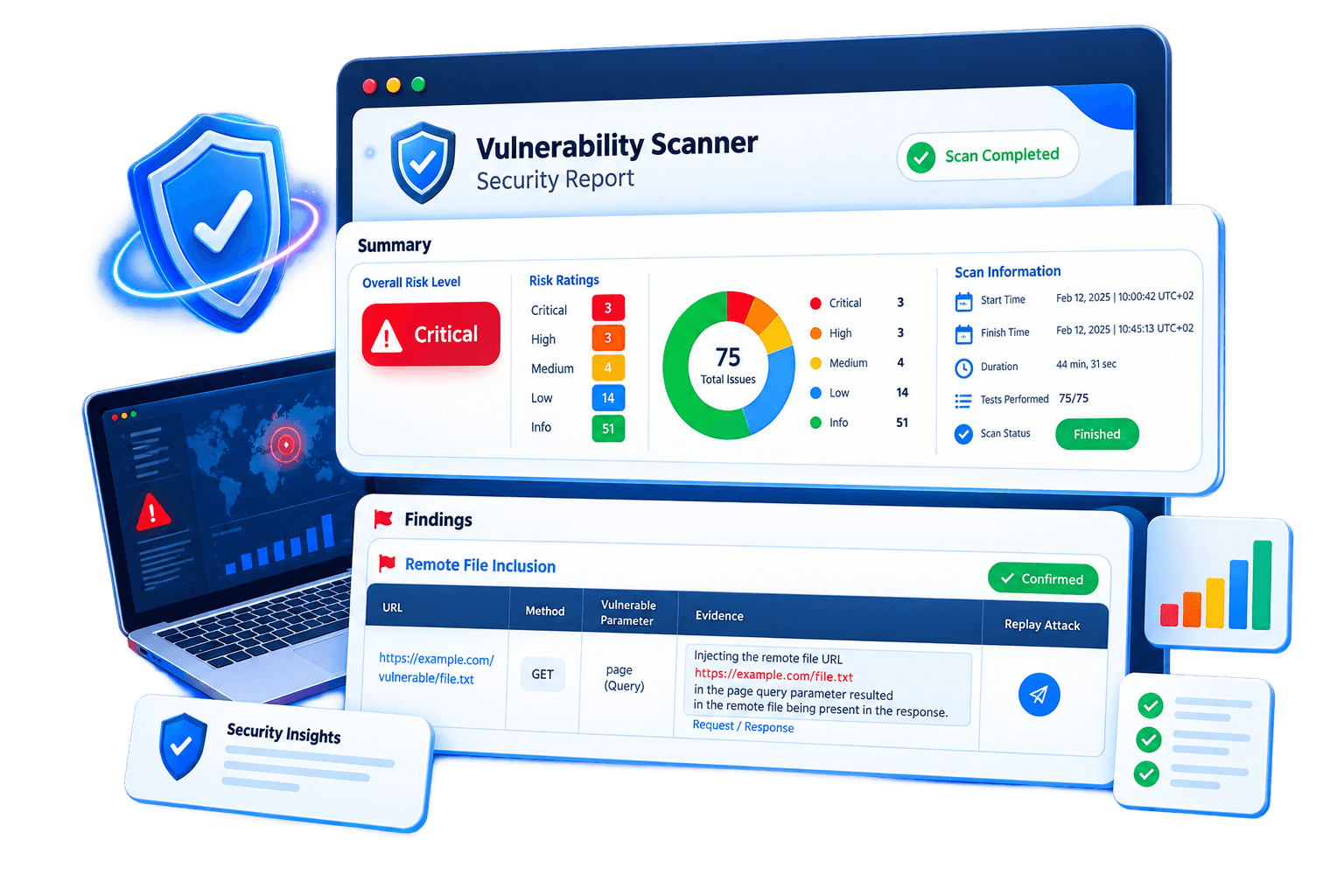
Continuous offensive security and exposure management for web applications, networks, APIs, and cloud infrastructure.
47,000+
Security professionals
2.1B+
Vulnerabilities found
99.3%
Detection accuracy
< 0.8%
False positive rate
1,200+
Pentest firms
SOC 2 II
Certified & ISO 27001
Find vulnerabilities before attackers do
Protect your web applications, networks, APIs and cloud infrastructure with automated security testing. Discover exposed assets, identify vulnerabilities, validate security risks and get actionable reports from one powerful platform.
- STEP 01
Define the project
Group domains, IPs, apps and APIs into one workspace with a clear scope.
- STEP 02
Discover and map
Reconnaissance tools find subdomains, open ports, technologies and exposed services automatically.
- STEP 03
Scan every layer
Web, network and API scanners run together, on demand or on a schedule.
- STEP 04
Validate and report
Confirm high-risk findings with safe checks and export one clean report.
- One workspace per project
- Scheduled re-scans
- Unified findings
Discover every asset and entry point across your attack surface
Get visibility into your external attack surface by discovering domains, IP addresses, applications, APIs, subdomains, and exposed services. Bring your assets together to understand what is publicly accessible and where potential security risks exist.
Combine automated reconnaissance, asset discovery, and exposure analysis to build a clearer picture of your infrastructure and identify areas that need further security testing.
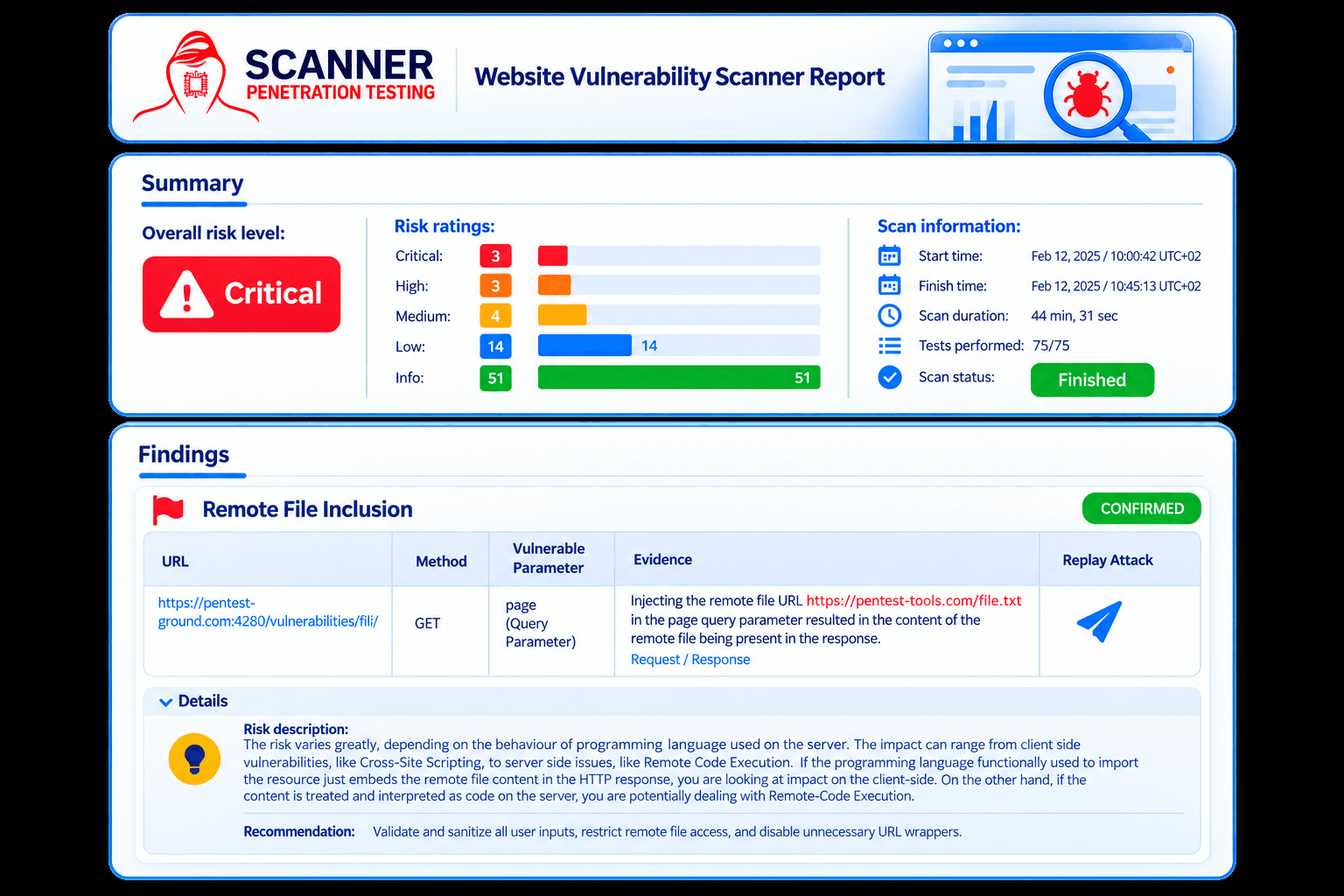
Every attack surface, fully tested
Our scanner performs 16+ security checks across your web stack, examining SSL/TLS, security headers, browser policies, cookies, and potential information exposure to deliver actionable security findings.
SSL / TLS Security
SSL certificate validity, expiration, supported TLS versions, weak cipher suites, and HSTS configuration.
Security Headers
Checks HTTP security headers including HSTS, X-Frame-Options, X-Content-Type-Options, Referrer-Policy, and Permissions-Policy.
Content Security Policy
Evaluates CSP presence, policy directives, unsafe-inline and unsafe-eval usage, and script source restrictions.
CORS Configuration
Identifies overly permissive origins, wildcard policies, preflight configuration, and potentially unsafe credential exposure.
Cookie Security
Reviews Secure, HttpOnly, and SameSite attributes to identify weaknesses in session and authentication cookie configurations.
Information Disclosure
Detects exposed server versions, framework details, debug information, sensitive response data, and informative error messages.
XSS Security Testing
Evaluates CSP-based script restrictions and tests web application injection points for potential cross-site scripting vulnerabilities.
HTTPS Enforcement
Checks HTTP-to-HTTPS redirects, redirect destinations, HTTPS configuration, and potential mixed-content issues.
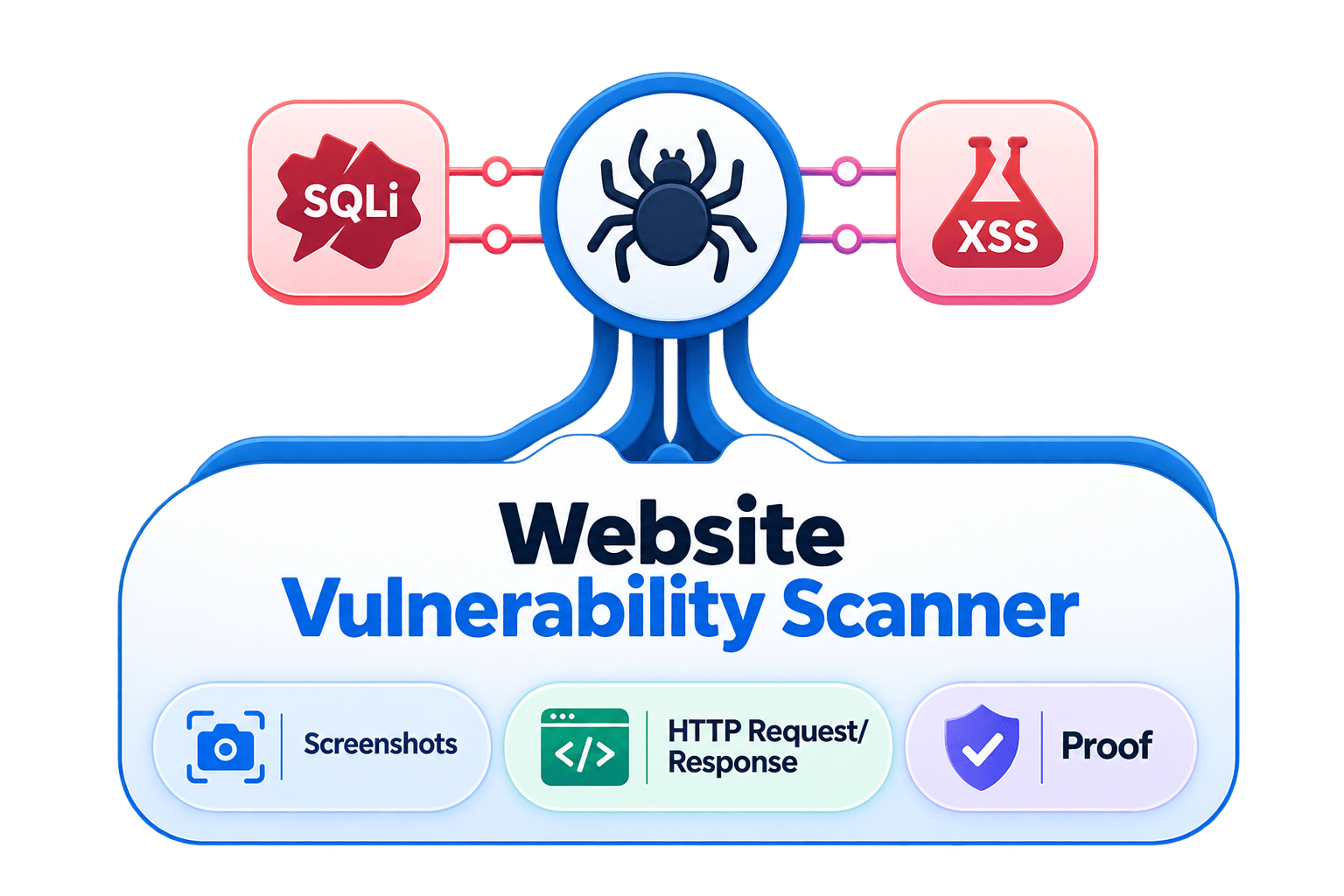
Trust your results. Validate every finding
Every critical finding goes through sandboxed PoC execution before it alerts. If it can't be confirmed exploitable, it doesn't surface.
Sandboxed execution
Payloads run in full isolation zero risk to your production environment.
Evidence capture
PCAP captures, HTTP transcripts, and timing proofs attached to every finding.
Sub-1% false positives
Industry-leading signal quality. Your team reviews real risk, not noise.
Generate proof-backed reports every day
Our built-in advanced reporting tool transforms raw findings into structured, actionable reports on which developers, IT teams, and management can act immediately.
Findings come with risk levels, risk description, and step-by-step remediation guidance to drive real fixes. Every report includes proof, such as screenshots, payload execution results, and highlighted HTTP request/response data to back up findings. Vulnerabilities are mapped to CWE and OWASP Top 10 (both 2017 and 2021) to help security teams prioritize risks effectively.
With customizable report formats, you can present Website Vulnerability Scanner findings to technical teams, executives, or auditors, making security issues impossible to ignore.
Sample Website Vulnerability Scanner report
This sample report from our scanner shows the main sections it includes, the look and feel, plus the level of detail for the findings.
Download sample reportAn overview of all findings with a visual breakdown of risk levels across every identified vulnerability.
From scan to fix fully automated
Wire vulnerability discovery directly into your development pipelines. No manual triage handoffs.
Scan & Discover
Auto asset discovery and vulnerability scanning triggers on schedule, code push, or deployment webhook.
AI Triage
The AI engine validates, deduplicates and ranks findings. Only confirmed issues reach your team.
Prioritize & Assign
Risk-ranked findings route to the right team automatically via Jira, Linear, or Slack with full context.
Remediate & Verify
Developers fix guided by AI-generated patches. Automated re-scan confirms the fix is clean.
Report & Prove
One-click reports for executives, clients, and auditors customized, white-labeled, always current.
Use this tool from your command line interface
If you prefer it, we also provide a CLI version of our Website Vulnerability Scanner. Through the ScanCore CLI, you can run scans against your web apps and start gathering insights for your next move.
1. Installation
If you have docker or pip installed, you can use them to get scancore:
2. Usage
Quickstart: run the following command in your terminal to find the vulnerabilities of your website.
You can learn more options with the --help flag:
Frequently asked questions
Everything you need to know before your first scan.
Yes. Scans are non-destructive and rate-limited by default, and any payload that could have side effects runs through sandboxed proof-of-concept validation instead of against your live system, so normal traffic and uptime are unaffected.